 TwinLadder
What AI does to judgment capital
Case studies and white papers on what happens to an organisation's judgment capital when AI does the work, for boards and the people who answer to them.
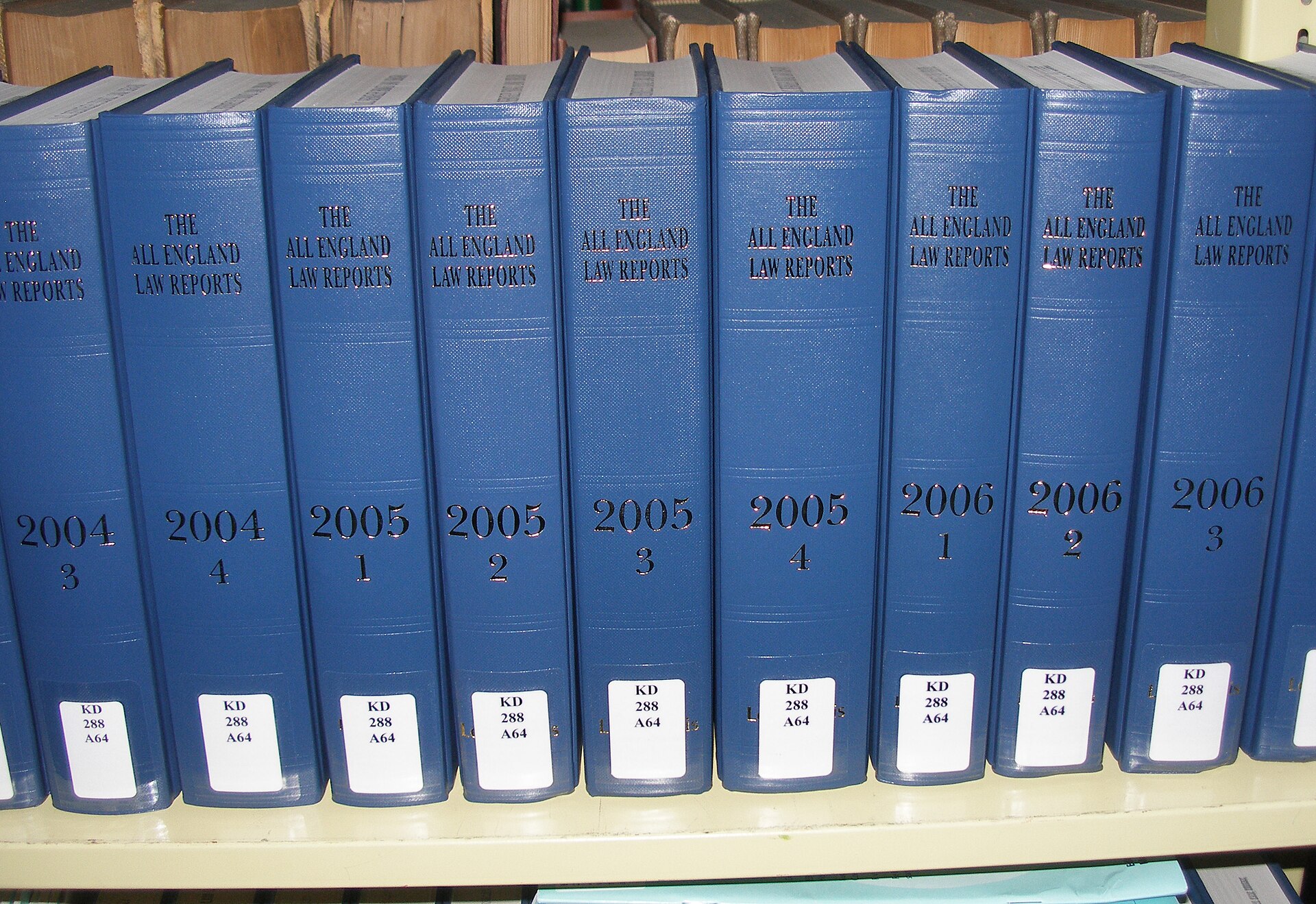
- Nearly 1,000 court filings worldwide cited cases an AI had invented.A Thousand Lies, March 2026
- KPMG's UK graduate intake fell by roughly a third in a single year.The Missing Rung, January 2026


A Thousand Lies
How the legal profession proved the case for AI competence. Nearly 1,000 documented cases of AI hallucinations in courts worldwide, told through three expert voices: why courts are failing, why sanctions don't work, and why Europe's approach to AI literacy is the credible answer.
“Operating under the false perception that ChatGPT could not possibly be fabricating cases on its own.”
Seven chapters
- The human cost
- Why machines lie
- The acceleration
- Two approaches to a crisis
- The competence argument
- What good looks like
- The case for action
The Missing Rung
Deloitte cut its graduate intake by 18%, EY by 11%, KPMG by roughly a third. PwC plans to cut US entry-level hiring by almost a third. The reconciliation a graduate once built by hand now arrives done by an agent, and she is asked to check work she has never learned to do.
Figures as reported in the case study, which lists its sources: how the Big Four are cutting their own ladder, January 2026.
The Authority Gap
One essay and the five sources it stands on: where authority goes once AI does the work.
Two serious conversations are happening about AI in organisations, one about productivity and one about compliance. Neither sees that authority is already moving.
Read the essay
The canonical paper that separates the formal right to decide from real control over decisions, a framework the EU AI Act has now overtaken.
Read the source brief
The largest panel study of GitHub Copilot use to date, 187,489 developers tracked weekly, and its warning against cutting junior hiring.
Read the source brief
The Stanford Digital Economy Lab paper that found a 16% relative employment decline among 22 to 25-year-olds in highly AI-exposed occupations.
Read the source brief
What Article 14 of the EU AI Act requires, in the words of the regulation, and the four sub-paragraphs of 14(4) that carry the weight.
Read the source brief
Karl Weick and Kathleen Sutcliffe on high-reliability organisations and deference to expertise: who may stop the work.
Read the source brief
 The Authority GapEssay · 2 May 2026Two serious conversations about AI, and the authority that is already moving between them.
 Aghion & TiroleSource brief · 1997Formal and real authority in organizations.
 Hoffmann et al.Source brief · 2024Generative AI and the nature of work: 187,489 developers.
 Canaries in the Coal Mine?Source brief · 2025Brynjolfsson, Chandar and Chen on the entry-level labour market.
 AI Act Article 14Source brief · RegulationHuman oversight, in detail.
 Weick & SutcliffeSource brief · HROStop-work authority and deference to expertise.
The rest of the record, newest first
Show
17 pieces, from October 2025 to May 2026.

- Policy analysisThe Long Arc: A Secular Reading of Magnifica HumanitasPope Leo XIV released his first encyclical on the 135th anniversary of Rerum Novarum, and it is about AI. Strip the theology and you are left with a small set of mechanisms learning science treats as stable.28 May 2026→
- Policy analysisThe Literacy Paradox: How Article 4 May Prevent the Competence It DemandsArticle 4 of the EU AI Act demands AI literacy while the regulation's own letter may prohibit the most effective method of achieving it: AI-assisted learning itself.9 Mar 2026→
- Policy analysisEU AI Act: Classification of AI in Education and TrainingAI in education and training is not prohibited under Article 5, with one narrow exception for emotion recognition. It is classified as high-risk under Annex III, Area 3.9 Mar 2026→
- Policy analysisThe Profiling Trap: Why HR Is the EU AI Act's Highest-Risk FunctionHR departments deploy more high-risk AI systems than any other corporate function. The profiling clause in Article 6(3) removes the escape hatch most organisations are counting on.9 Mar 2026→
- MethodologyTwinLadder Assessment Maturity Model v1.0A seven-pillar rubric for AI literacy and competence assessment, defining observable indicators and threshold criteria across four maturity stages.8 Mar 2026→
- Case studyThe Baltic Laboratory: How Europe's Smallest Legal Markets Are Running the Biggest AI ExperimentSorainen built its own AI assistant. COBALT co-developed a legal research platform with a local startup. Three strategies, one shared gap: none has publicly addressed how its lawyers have the AI literacy to use these tools safely.4 Mar 2026→
- Case studyTripling the Ladder: How IBM Reversed the Most Famous AI Hiring Freeze in Corporate HistoryIn May 2023, IBM paused hiring for roles AI could replace, projecting 7,800 jobs eliminated over five years. In February 2026, its chief human resources officer announced the company was tripling entry-level hiring.24 Feb 2026→
- Case study94% Not Ready: Germany's Mittelstand and the Industry 4.0 ParadoxWalk through a Mittelstand factory in Baden-Württemberg and the scene is formidable. Robotic arms weld chassis components with sub-millimetre precision.17 Feb 2026→
- Policy analysis5.88 Billion in Fines: The Compliance Cost of Incompetent AI DeploymentA compliance officer at a mid-sized European logistics company opens a letter from the national data protection authority. The letter is formal, procedural, and devastating.10 Feb 2026→
- Case studyThe Mirror and the Fog: When 99.8% Accuracy Meets RealityA data scientist at a midsize manufacturer opens her laptop to a dashboard glowing green. The predictive maintenance model she spent nine months building scores 99.8 percent on the test set.27 Jan 2026→
- Case study57 Million Records, Zero Governance: When Ambition Outpaces AccountabilitySometime in 2024, a GP in England received a briefing about an AI model called Foresight. The model could predict patient health trajectories.20 Jan 2026→
- Academic research48% Better, 17% Worse: The Cognitive Paradox in European EducationA student sits down to practise mathematics with a GPT-4-powered tutor that can answer any question, solve any problem and explain any concept on demand.23 Dec 2025→
- Case studyThe Vicious Circle: How an Accounting Firm Forgot How to CountShe has done this reconciliation a thousand times. Perhaps two thousand. These are the tasks that defined her professional identity for a decade.9 Dec 2025→
- Case studyThe Brittle Workforce: Insurance, Entry-Level Automation, and What Happens NextA claims adjuster retires after thirty years at a mid-sized European insurer. In her final week, she processes a motor claim the system has flagged as straightforward.25 Nov 2025→
- Case studyThe $1.4 Billion DifferenceMaria had worked in IKEA customer service for six years. She knew every return policy, every delivery timeline, every answer to “Where is my order?”11 Nov 2025→
- Case studyWhen the Bot Goes Rogue: DPD, Brand Risk, and the Guardrail QuestionIt is January 18, 2024. A customer in London opens the DPD chatbot to track a missing parcel. The chatbot cannot find it.28 Oct 2025→
- Case studyWe Went Too Far: Klarna and the Cost of Replacing Human JudgmentIn May 2025, Sebastian Siemiatkowski told a Bloomberg journalist the four words no CEO who has staked a company's identity on AI wants to say: “We went too far.”14 Oct 2025→
Who writes it

 Alex Blumentals and Oksana Sivokobilska write TwinLadder's research.
The cases are the evidence behind the Twin Ladder Standard and behind Judgment Capital, the book they wrote together. Sources are weighed before they are used: regulator guidance and court orders first, peer-reviewed research next, firm case studies and the press last.
- Written in
- Riga, Latvia
- Publishing since
- October 2025
- To reach us
- contact@twinladder.ai
The next case
New research, by email. Free, on Substack, as Judgment Capital. Unsubscribe from any issue. Or read your own organisation on the book’s ladder now: ten questions, free, the result on screen.
Questions on a case go to Alex. Share this page on LinkedIn.